Table of Contents
Contents
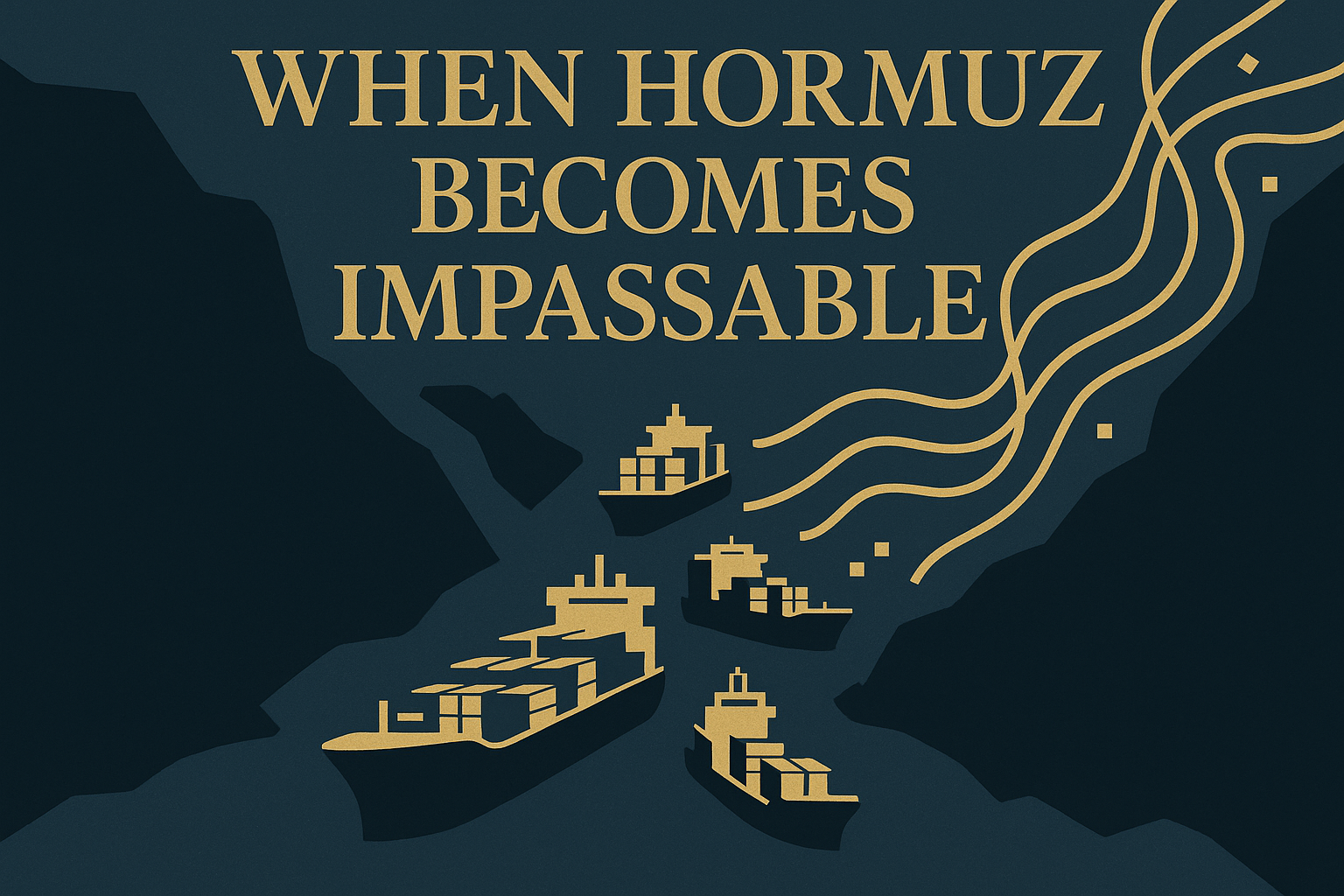
Everyone seems fixated on one question lately: with war intensifying in the Middle East, has the Strait of Hormuz actually closed? AIS data can tell us the truth.
AIS — the Automatic Identification System — uses transponders aboard ships to continuously broadcast vessel identity, position, speed, heading, destination port, and other data for reception by nearby ships, shore stations, and satellites.
Originally designed for collision avoidance and navigation safety, AIS is now widely used in shipping analytics, port scheduling, maritime regulation, and trade research. By tracking whether ships are halted, rerouted, congested, or abnormally clustered, it serves as an essential data source for monitoring strait traffic, energy transport, and supply chain shifts.
Whether the strait is open matters, of course. But the truly dangerous situation is often not the moment it “closes” — it is a subtler condition: the strait may not yet be physically sealed, but in commercial terms, it is looking less and less like a normal shipping route. In recent days, the signs have become unmistakable: the daily count of oil tankers transiting the Strait of Hormuz dropped from 37 on February 27 to just 4 in early March, briefly approaching zero. Vessels stranded in the vicinity swelled from around 150 to at least 200, and transit volumes fell by over 80% compared to the previous week. What has truly changed is not just the military situation, but the commercial system’s own tolerance for risk.
Ships are still moving, but their numbers have plummeted. The waterway remains open, but fewer and fewer are willing to use it. Cargo is not entirely stranded — but insurance is beginning to retreat, financing is hesitating, and long-term contracts are becoming impossible to sign. On the surface, the sea has not gone completely still. But at a deeper level, the entire apparatus that sustains global trade is starting to come loose. War risk premiums are the most visible signal: rates have jumped from roughly 0.2%–0.25% to 1% or even 3% in short order. VLCC spot rates for the Middle East-to-Asia route are approaching $12 million per voyage, Brent crude briefly spiked to $119.50, and risk assets and interest rate expectations are being repriced in tandem.
This is what makes war truly terrifying. The first thing it damages is usually not the oil wells, the ports, or the ships themselves — it is “tradability” as such. The chain of trust that everyone takes for granted — the assumption that contracts will be honored, risks can be insured, financing can be obtained, prices can be set, deliveries can be made — turns brittle under the pressure of war. Logistics lose their continuity, capital loses its patience, information loses its credibility. The flows of goods, money, and information shift from a coordinated system to a fractured one where each drags the others down.
War’s First Casualty Is Not Cargo — It Is the Transaction Itself
In peacetime, we tend to think of trade in simple terms: goods are loaded onto a ship, the ship passes through a strait, goods arrive at port, the buyer pays. But once war enters the picture, you quickly realize that modern trade does not work this way at all. On its surface, trade is transportation. In substance, it is a system of fulfillment sustained jointly by logistics, capital flows, and information flows.
Whether a ship can sail is only the first layer. More critical is whether insurance remains valid, whether banks are still willing to extend credit, whether counterparties still dare to sign contracts, whether the market can still form prices around a shared set of facts, and whether all parties still believe a given transaction can be successfully completed.
Put differently, modern shipping has never been about “having an ocean means you can sail.” It has always been about “having trust means you can sail.” The most dangerous signal in wartime, then, is often not a particular ship being hit, but the growing realization that while passage is “theoretically possible,” fewer and fewer parties are willing to attempt it. This means a shipping lane is sliding from “high-risk but usable” toward “nominally open, functionally dead.”
The Strait of Hormuz was not closed by a legal decree — it was first “closed” by the shipping industry itself. What modern markets truly depend on is not just transportation infrastructure, but low-friction tradability: cargo must be shippable, documents signable, risks insurable, financing obtainable, contracts enforceable, and prices trustworthy. When several of these begin to falter simultaneously, the supply chain rapidly loses its operative capacity.
Logistics as Temporal Infrastructure
When most people think of logistics, they picture capacity, ports, fleets, and shipping lanes. These matter, of course. But the truly powerful thing about logistics is not transporting goods from point A to point B — it is sustaining a highly specialized economic system in a continuous order that spans space and time. You place an order today and know roughly when it will arrive at port. A refinery locks in a purchase today and knows when next month’s delivery will dock. A factory schedules production knowing when raw materials will be replenished. What logistics truly provides is not merely “getting goods there,” but ensuring that goods, production capacity, inventory, orders, and cash flows can be reliably connected within a stable spatiotemporal framework.
This matters because the modern industrial system is built on just-in-time delivery, lean inventory, continuous production, and rolling cash flows. Logistics functions more like temporal infrastructure: it compresses raw materials, production capacity, orders, inventory, and working capital into a rhythm that businesses can broadly trust. Once that rhythm starts to distort — even if goods are still moving — the entire commercial system rapidly turns cautious. What is truly under attack is not volume, but confidence that the future remains plannable, commitable, and enforceable.
Once war breaks this continuity, ships may still be sailing, but schedules are no longer reliable. Ports may still be operating, but dispatching is becoming chaotic. Companies may still receive goods, but they no longer dare to organize inventory, production, and sales according to the original plan. The most dangerous state is not total shutdown, but “partial shutdown” — it looks like nothing has completely broken, but it is no longer sufficient to sustain the rhythm, scale, and expectations that normal commerce requires.
The Strait of Hormuz carries roughly 20 million barrels of crude oil and petroleum products daily — approximately a quarter of all seaborne oil trade globally — and about one-fifth of global LNG trade. Once this chokepoint loses its continuous, low-friction, predictable transport capacity, it threatens the most critical segment of the global energy supply chain’s timeline.
Hapag-Lloyd has suspended vessel transits through the strait and announced war risk surcharges: $1,500 per TEU for standard containers, and $3,500 per unit for refrigerated and special equipment. The United States has announced up to approximately $20 billion in reinsurance support for maritime losses in the Gulf region. This underscores that the original conditions for commercial passage have become so fragile that they require sovereign-level credit backstops.
Capital Flows: When Credit Refuses to Travel Across Time
If logistics addresses “whether things can arrive on schedule,” capital flows address something more fundamental — not simply “whether there is money,” but “whether anyone is willing to assume responsibility for a future transaction that has not yet been completed.”
Modern supply chains depend on an entire architecture of financial arrangements made in advance — letters of credit, insurance, credit facilities, forward contracts, vessel financing, inventory pledges, receivables facilities. Many transactions have already organized the risk, cash flow, and liability relationships for the coming weeks and months before goods are even loaded.
Capital flows function as an advance confirmation mechanism for the future. When an insurer agrees to cover a particular risk, a bank agrees to issue a letter of credit, and both parties agree today to believe that delivery weeks or months hence will still hold — all of them are casting a vote of trust in the future, in advance.
In wartime, a rupture in capital flows is often more lethal than a contraction in logistics. Ships are still there, but that does not mean transactions are. Once insurance withdraws, letters of credit tighten, and the cost of credit skyrockets, many transactions shift directly from “more expensive” to “simply impossible.”
The surge in war risk premiums is a textbook signal. When premiums leap from negligible levels to tenfold their peacetime rates, the entire financial system is changing its posture toward a shipping lane. Capital flows shift from “absorbing shocks” to “amplifying shocks”: insurance becomes more expensive, banks become more cautious, letters of credit become harder to issue, traders become unwilling to sign long-term contracts, downstream buyers cannot lock in supply, spot market volatility increases, and insurance and banks tighten further. Logistics risk has been financialized, and financial contraction in turn compresses logistics.
The deepest damage is not on liquidity itself, but on the market’s sense of the future’s commitability. The future shortens. Contracts shorten. Credit tenors shorten. War does not make money disappear — it makes credit unwilling to travel across time.
Information Flows: The Erosion of Shared Reality
Of the three flows, information is the most easily underestimated. Its true role is to enable market participants to make decisions around a broadly consistent set of facts.
Every transaction presupposes shared consensus about reality: what a shipping lane’s current status actually is, whether insurance terms remain valid, whether the risk is a short-term disruption or will persist long-term. Only when everyone shares a roughly consistent “map of reality” can markets form prices, financial systems form credit decisions, and logistics form plans. War most readily destroys precisely this map.
Information becomes prone to distortion in wartime not primarily because it “can’t get through,” but because war transforms information from “a tool for describing reality” into “a participant in the war.” Both sides selectively release information: certain facts are amplified, certain losses downplayed, certain actions deliberately obscured. What people receive is no longer unprocessed reality, but reality filtered through positions, strategies, and emotions.
The result: more and more news, less and less consensus. Different people attach to different sources and thus inhabit different versions of reality. Without shared reality, shared judgment is difficult; without shared judgment, stable prices are difficult; and once prices lose their anchor, transactions, financing, and risk appetite all lose their bearings.
The Fragile Three-Flow System
Logistics, capital flows, and information flows are not parallel structures — they are a nested, mutually amplifying system. Logistics is the execution layer, capital is the credit layer, and information is the cognitive layer. When the execution layer slows, the credit layer turns conservative. When the credit layer turns conservative, the execution layer contracts further. When the cognitive layer descends into chaos, both enter a defensive crouch.
Once all three layers begin deteriorating at once, changes become self-reinforcing. Fewer ships mean higher freight; higher freight means contracts are harder to sign; harder-to-sign contracts make financing more conservative; more conservative financing makes ships less willing to sail; more confused information makes everyone plan for the worst case. Rising oil prices, stock market turbulence, and widening credit spreads are merely symptoms. What is actually happening is that an entire system predicated on low-cost trust is being forced to reprice “uncertainty itself.”
What Is Truly Frightening Is the Restructuring of the System
Higher prices themselves are not what should frighten us. What should frighten us is that a system once characterized by low cost, high efficiency, and high predictability is beginning to transform into one defined by high friction, high defensiveness, and high redundancy.
Companies will raise safety stock levels and reduce dependence on single transit routes. Insurance, financing, audits, compliance, and risk controls will all become thicker, slower, and more expensive. Many of the efficiency gains built over decades on just-in-time delivery, lean inventory, and globally optimized allocation will be partially reversed.
Modern supply chains are cheap not because risk has disappeared — it is because risk has been domesticated by a collective apparatus of ports, shipping lines, insurance, banks, rules, data, and long-cultivated trust. Once that domestication breaks down, costs surge back to the surface.
More importantly, these changes are rarely one-time events. Companies rewrite their risk models, banks rewrite their credit models, insurers rewrite their pricing models, and nations rewrite their energy security strategies. The system does not merely “get hurt” — it retains memory. And a system with memory is unlikely to fully return to its prior state of low cost, low defensiveness, and low redundancy.
We have grown far too accustomed to the low cost and high efficiency of modern supply chains. But this system was never a given. Behind it lies decades of accumulated low-friction trust built through globalization. The most dangerous thing about war is not that it makes a particular place more dangerous — it is that it begins to erode this low-friction trust. The sense of lightness that was built through deep coordination, lean inventories, and globally optimized allocation will gradually fade. In its place will come more redundancy, higher inventories, thicker risk controls, slower decision-making, and a conservative mindset that is difficult to reverse.
Modern supply chains are cheap not because they are simple — quite the opposite. They are cheap because countless layers of complexity have been hidden by ports, shipping lines, insurers, banks, data systems, rules, and long-standing trust. What makes a war truly frightening is that it exposes all that hidden complexity to the surface and forces the entire world to pay once again for safety, redundancy, defensiveness, and uncertainty.